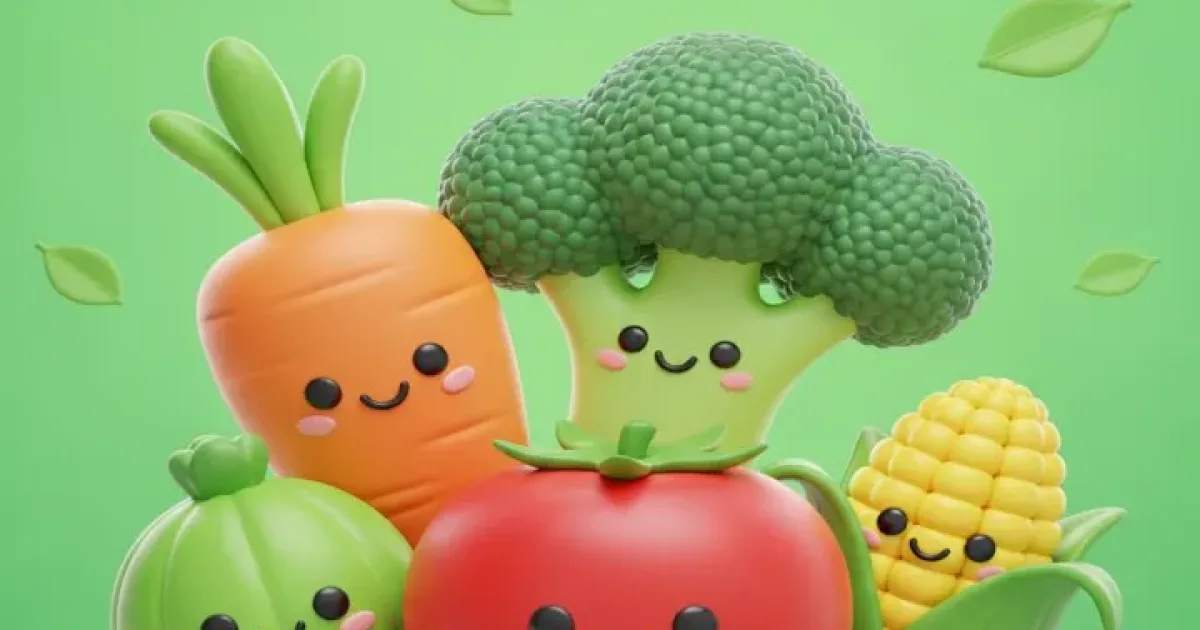
A child does not refuse broccoli because they dislike it. Very often they refuse it because they have never really looked at it — and unfamiliar food is, to a small child, a risk.
Refusing new food is normal, not naughty
Around age two, most children become wary of unfamiliar food. It has a name — food neophobia — and it is a developmental stage, not a character flaw. It peaks in the toddler years and fades on its own.
Knowing that changes the strategy. You are not fighting stubbornness; you are shortening the distance between "unknown" and "familiar".
Familiarity can start away from the plate
A child who can recognise and name a carrot, a tomato and a cabbage has already met them. When one appears on the plate, it is no longer a stranger — and the argument becomes much smaller.
This works precisely because there is no pressure attached. Nobody is asking the child to eat a picture.
Talk about it without persuading
- Colour — "the carrot is orange, the spinach is green"
- Shape — round, long, leafy
- Which part we eat — root, leaf, fruit, flower
- Where it grows — under the ground, on a vine, on a tree
- What it does — plain and simple, without making it a bargaining chip
What not to do
Do not make vegetables the price of dessert. Trading turns them into the unpleasant thing that must be endured, and that lesson lasts years.
Do not comment on how much was eaten. Offer, name, and let it go. A vegetable that appears calmly on the table twenty times will usually be tried eventually; a vegetable attached to an argument rarely is.
How EduPlayKids helps
The Vegetables category introduces twenty vegetables with realistic photographic pictures and their names spoken clearly — carrot, broccoli, spinach, tomato, pumpkin, cabbage and more.
A child hears the name and taps the right vegetable. It is recognition practice with no plate, no pressure, and no negotiation.
Meet Twenty Vegetables 🥕
Realistic pictures, names spoken clearly.