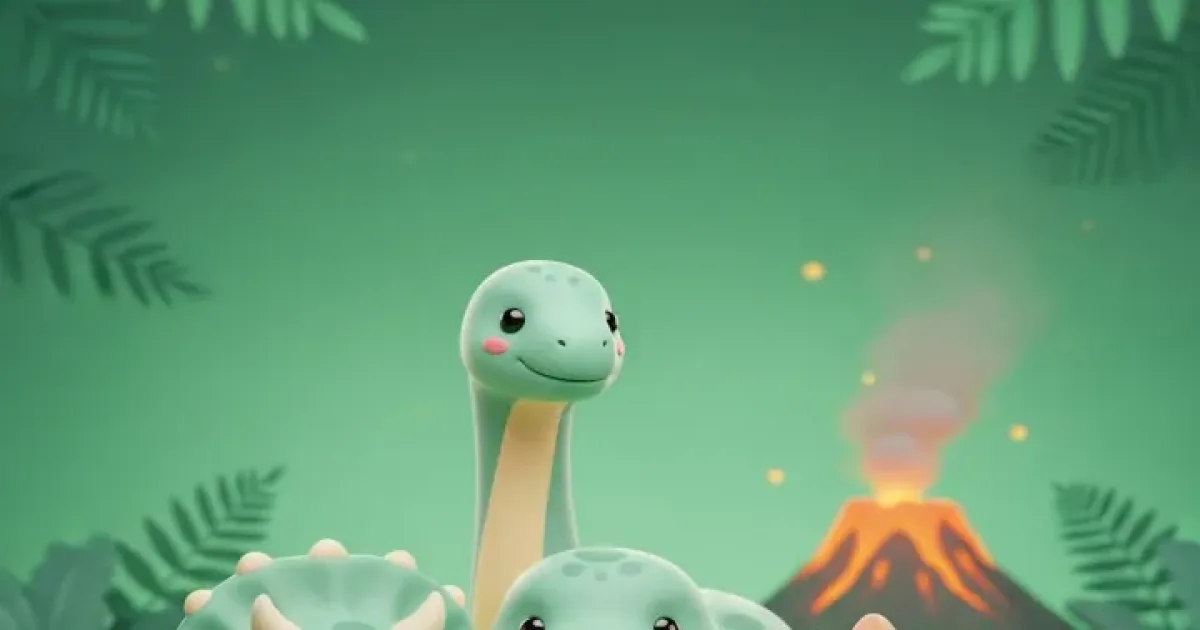
A three-year-old who cannot yet tie their shoes will happily say "Pachycephalosaurus". That is not a party trick — it is a child's brain doing something remarkable.
The dinosaur phase is real, and it is useful
Researchers call them intense interests: a period where a child fixates on one topic and consumes everything about it. Dinosaurs are the classic example — big, strange, extinct, and safely impossible to meet.
Children who go through one of these phases tend to build deeper vocabulary and longer attention spans. Not because dinosaurs are magic, but because the child is doing hard cognitive work voluntarily.
Long names are a feature, not a problem
"Parasaurolophus" is five syllables of pure phonological exercise. Learning it stretches the same skills a child needs for reading later: breaking sound into parts, holding a sequence in memory, and reproducing it accurately.
There is no need to simplify. A child who is interested will happily take on a word an adult would avoid.
What to talk about beyond the names
- Big and small — comparing a Brachiosaurus to a Velociraptor teaches size words
- What it ate — the first step towards categories: plants or meat
- Where it lived — land, water, air, and the idea that not everything shared a place
- How we know — fossils, bones, digging; the beginning of evidence
- Long ago — one of the hardest ideas for a small child, and worth starting early
Keep it friendly, not frightening
Some children love the roaring; others find it genuinely scary. There is no need for teeth and hunting scenes to make dinosaurs interesting. Calm, full-body pictures with accurate proportions do the job without the nightmares.
If a child is frightened, back off and return in a few months. Fear kills curiosity faster than boredom does.
How EduPlayKids helps
The Dinosaurs category introduces twelve species with museum-style illustrations — accurate proportions, calm expressions, no blood or hunting scenes — each with its name spoken clearly.
A child hears the name and taps the matching dinosaur, so the vocabulary is learned by ear long before they can read it. Four difficulty levels keep it challenging as recognition improves.
Meet Twelve Dinosaurs 🦖
Museum-style pictures, names spoken clearly.