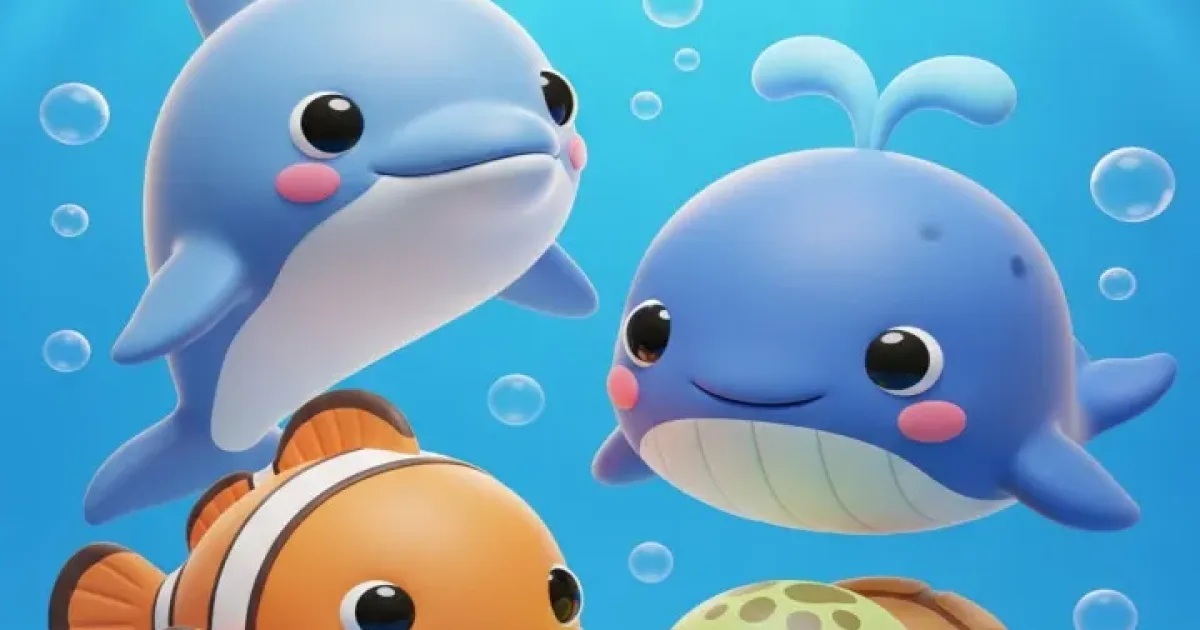
A child can visit a cat. They cannot visit a whale. Sea animals are most children's first experience of learning about something entirely through description — and that is a skill worth building.
Learning what you cannot touch
Almost everything a toddler knows, they know by handling it. The ocean breaks that rule: it is enormous, it is elsewhere, and its inhabitants arrive only as pictures, sounds and stories.
That makes sea animals unexpectedly valuable. A child practising this is practising how to learn about history, space, and everything else they will never hold in their hands.
Scale is the first surprise
A whale is bigger than a bus. A seahorse fits on a finger. Both live in the same water. Comparing them gives a child a genuine reason to use big-and-small language, and a reason to care about the answer.
Comparisons to things a child already knows work best: bigger than our car, smaller than your hand.
The sea has sounds too
- A dolphin whistles and clicks
- A whale sings, low and long
- Water itself has a sound children recognise instantly
- Most fish are silent — which is itself worth pointing out
Simple ideas that carry real science
A fish breathes water, we breathe air. A dolphin looks like a fish but comes up to breathe. An octopus has eight arms and no bones at all.
None of this requires explaining biology. Stated plainly, these facts are exactly the kind of thing a four-year-old repeats to everyone they meet for a week — and repetition is how it becomes knowledge.
How EduPlayKids helps
The Sea Animals category introduces twelve creatures with realistic pictures and real recorded sounds — dolphin, whale, shark, sea turtle, octopus, crab, seahorse, jellyfish and more.
A child hears the animal, then taps the one that made the sound. Four difficulty levels grow with them as recognition improves.
Dive Into Twelve Sea Animals 🐬
Real pictures, real sounds, voice-guided.