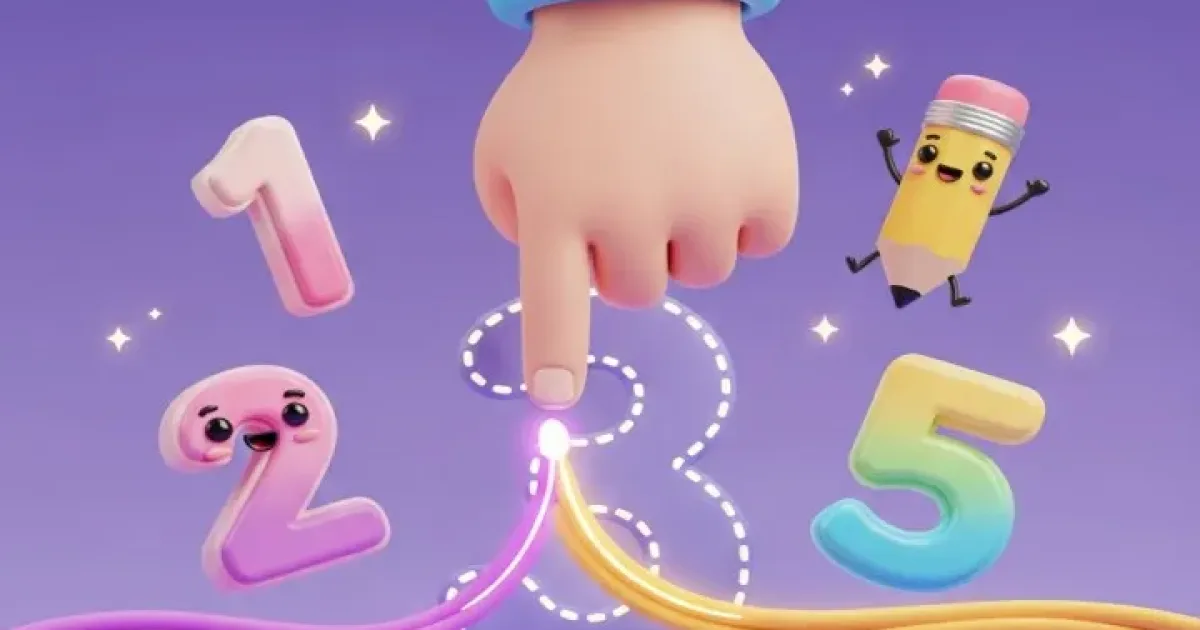
A child who cannot hold a pencil is not behind. They are simply missing the muscles and the control that writing quietly assumes — and both are built by playing, not by drilling.
Writing is the last step, not the first
Before a letter can appear on paper, a child needs a stable shoulder, a wrist that can hold still, fingers that move independently, and eyes that can guide the hand along a line. Handwriting is what happens after all of that is in place.
Pushing a pencil into the hand of a child who is not ready produces frustration on both sides. The useful work happens earlier, and it looks nothing like writing.
Everyday things that build the right muscles
- Tearing and crumpling paper — surprisingly demanding for small hands
- Picking up beads, buttons or cereal with thumb and index finger
- Squeezing dough, clay or a wet sponge
- Using safety scissors, even badly at first
- Buttoning, zipping and threading laces
- Drawing on a vertical surface, which stabilises the shoulder
Then comes following a line
Once the hand is strong enough, the next skill is guiding it deliberately along a path — a curve, a corner, a straight descent. This is exactly what tracing boards, sandpaper letters and wipe-clean workbooks are for.
What matters is not the tool but the repetition: the same shape, the same direction, many times, until the movement no longer needs thinking about.
Stroke order matters more than neatness
A letter drawn in the wrong order can look perfect and still slow a child down for years, because the movement has to be unlearned later. Start at the right point, move in the right direction, and let the neatness arrive on its own.
This is why a guiding arrow is worth more than an eraser. Showing where to begin prevents the habit; correcting afterwards only fights it.
One screen instead of a pile of toys
Wooden tracing boards, Montessori sandpaper letters, wipe-clean workbooks, magnetic drawing boards — they all train the same skill, and they all take up space. A finger on glass trains the same movement, and the guide never wears out or gets lost under the sofa.
How EduPlayKids helps
The Motor Skills categories offer seven tracing sets — numbers, letters, hijaiyah, hiragana, hanzi, hangul and the Russian alphabet — with proper stroke order, a guiding arrow, and cheerful praise for every finished shape.
Start with Trace Numbers: ten shapes, free forever, and simple enough that a three-year-old finishes one and immediately wants the next.
Let Little Fingers Practise ✏️
Proper stroke order, a guiding arrow, free to start.