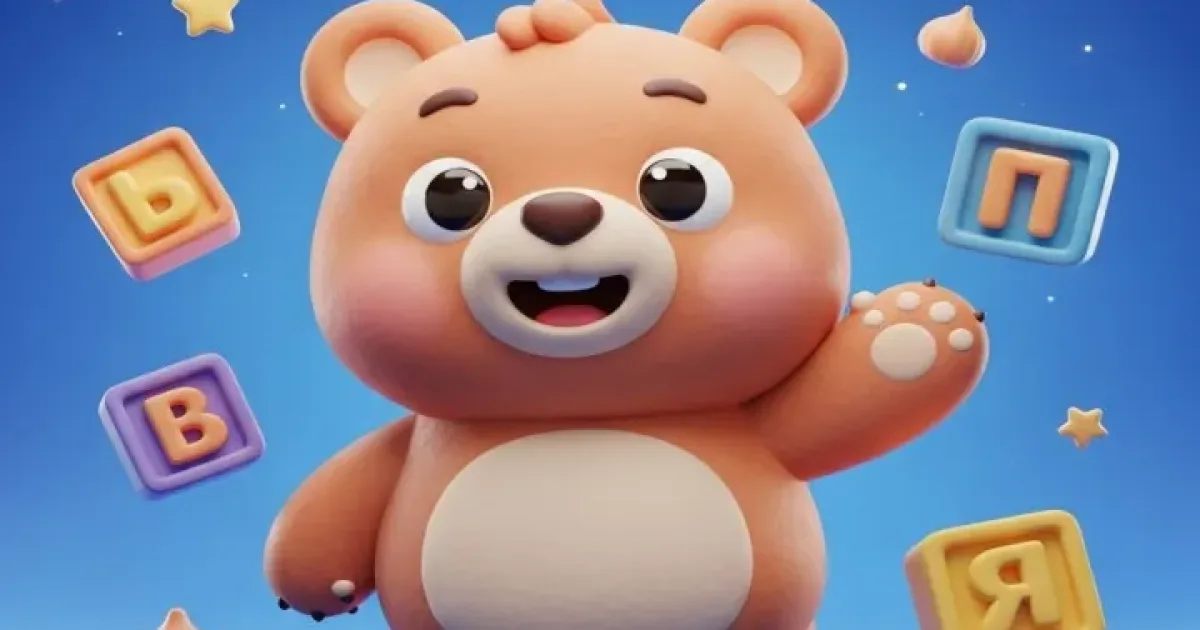
Cyrillic looks harder than it is — until you meet Р, Н and В, which look completely familiar and sound nothing like what you expect.
Three groups, not thirty-three letters
The alphabet has thirty-three letters, but they sort into three much smaller problems. Some look and sound like Latin letters (А, К, М, О, Т). Some are entirely new shapes (Ж, Щ, Ю, Я). And a handful look familiar but sound different — those are the troublemakers.
Teaching in that order turns a long list into three short lessons.
The false friends, first and slowly
- Р is not "p" — it is a rolled r
- Н is not "h" — it is n
- В is not "b" — it is v
- С is not "c" — it is s
- У is not "y" — it is oo
- Х is not "x" — it is a breathy kh
The new shapes are the fun part
Ж looks like a beetle. Ю looks like a key. Я is a backwards R and means "I". Children usually enjoy these more than the familiar letters, because there is nothing to unlearn — the shape and the sound arrive together, clean.
Let a child pick favourites. The strange ones stick faster than the sensible ones.
Two letters that make no sound
Ь and Ъ are not sounds at all — they change how the letter before them is pronounced. There is no need to explain this properly to a four-year-old. Just say "these two are helpers, they have no voice of their own" and move on.
Naming a difficulty honestly and briefly is better than hiding it. A child who has been told there is a strange bit stops worrying when they meet it.
How EduPlayKids helps
The Russian Alphabet category covers all thirty-three letters, each spoken by a native voice — so the false friends are heard correctly from the very first encounter, before any wrong habit forms.
When recognition is solid, Trace Russian Letters adds stroke order for each one. Free forever, no ads, no reading required.