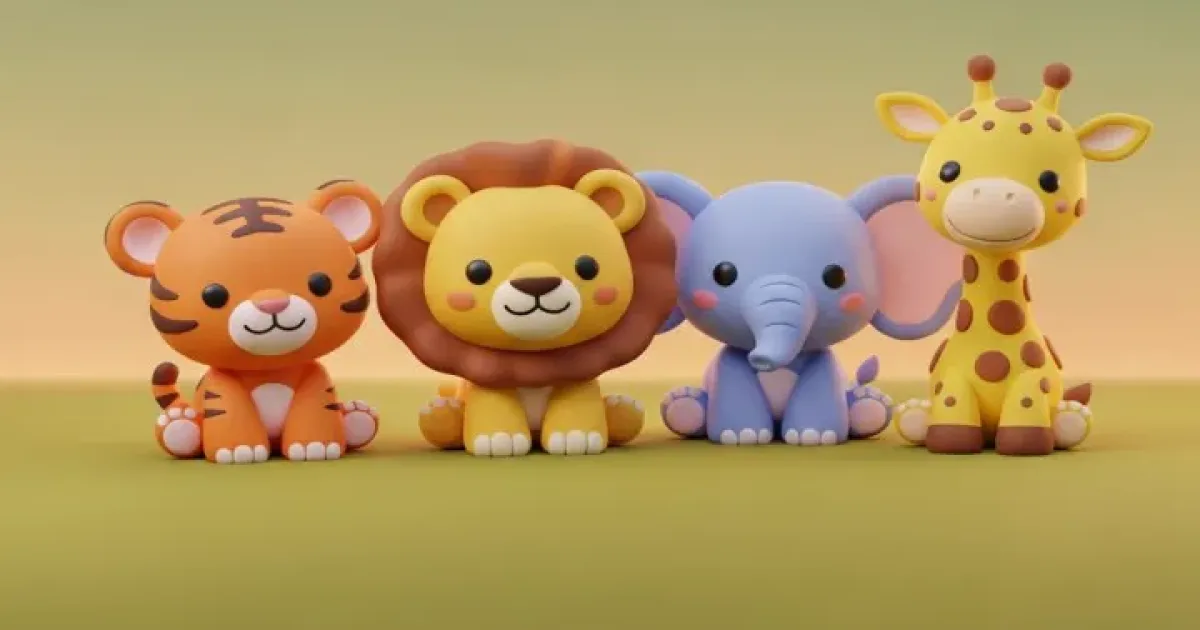
A child can know what a lion looks like and still be startled the first time they hear one. Sound is the half of an animal that flashcards leave out.
Farm animals first, wild animals next
Cow, chicken, duck and cat come first because a child may actually meet them, and because their sounds are easy to imitate. Wild animals are the natural second step: bigger, stranger, and mostly known through pictures and stories.
That gap between familiar and unfamiliar is where vocabulary grows fastest. A child already has a mental slot for "animal" — you are now filling it with more interesting examples.
Sounds carry information a picture cannot
An elephant's trumpet, a lion's roar, a monkey's chatter — each is instantly recognisable and impossible to guess from a photograph. Learning them trains the same listening skill that later separates similar speech sounds.
It is also memorable in a way that images are not. Ask a child a week later and the sound usually survives longer than the name.
Talk about more than the name
- Big or small — an elephant next to a monkey teaches size words
- What it eats — the first real category: plants or meat
- Where it lives — forest, savanna, mountain; the idea of habitat
- How it moves — runs, climbs, swings, swims
- What covers it — fur, feathers, scales
Keep it wonder, not fear
Some children find big predators genuinely frightening. There is no need for teeth and hunting to make a tiger interesting — a calm, full-body picture with an accurate shape does the job.
If a child is scared of one animal, skip it and come back in a few months. Curiosity survives boredom; it rarely survives fear.
How EduPlayKids helps
The Wild Animals category pairs twenty animals with real recorded sounds and photographic-quality pictures. A child hears the animal, then taps the one that made the sound.
Because the answer lives in the ear, it works long before a child can read — and it keeps working as they get faster, across four difficulty levels.
Hear Twenty Wild Animals 🐅
Real sounds, real pictures, voice-guided.