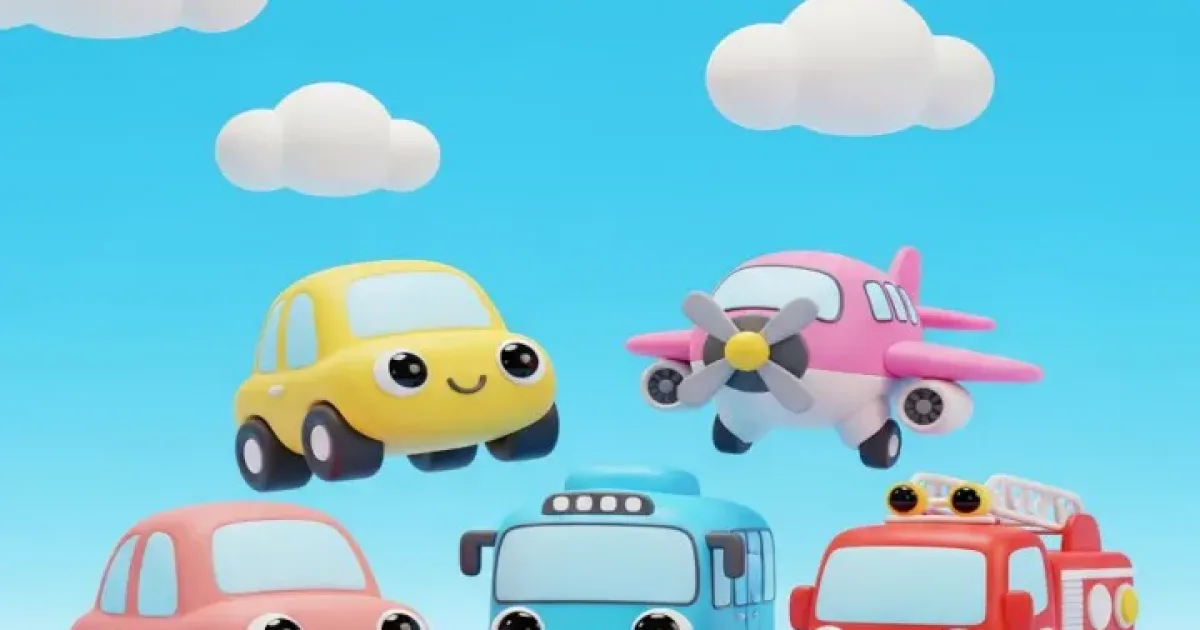
Land, water, air. Long before a child can count past ten, vehicles teach them that things belong to groups — and that groups have rules.
Sorting is a thinking skill
Putting a boat with a ship and a plane with a helicopter is not trivia. It is classification — noticing what two things share, and deciding that the shared thing matters more than the differences.
That is the same move a child later makes with letters, numbers and words. Vehicles are simply the easiest place to practise it, because the categories are visible and the examples are everywhere.
Three groups a toddler can actually hold
- On the ground — car, bus, truck, motorcycle, bicycle, train
- On the water — boat, ship
- In the air — plane, helicopter, hot air balloon
- And the interesting edge cases: an ambulance is a car with a job, a tractor works instead of travelling
Vehicles with jobs are worth naming
An ambulance, a fire truck and a police car are the first vehicles most children can attach a purpose to — someone is hurt, something is burning, somebody needs help.
That makes them useful beyond vocabulary. A child who knows what an ambulance is for is less frightened by the siren, and more able to understand a conversation about safety.
The sound is half the recognition
A motorcycle, a truck and a train are recognised by ear long before a child can name them on sight. Sirens, horns and engines are among the loudest features of a child's world.
Naming those sounds turns a startling noise into an identified thing — which is, in a small way, how a child learns that the world is orderly.
How EduPlayKids helps
The Vehicles category covers twenty vehicles with real recorded sounds and clear photographic pictures — from car and bicycle to ambulance, tractor and hot air balloon.
A child hears the vehicle, then taps the one that made the sound. Four difficulty levels keep it interesting as recognition gets quicker.
Twenty Vehicles to Sort 🚗
Real engine sounds, real pictures.