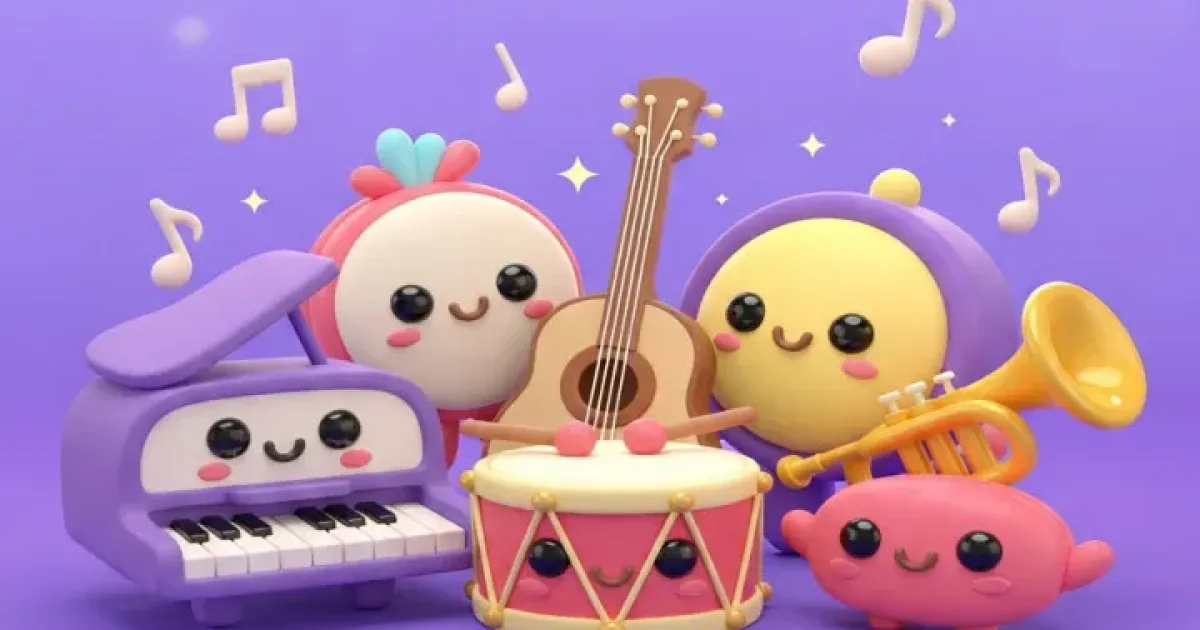
Children learn to look before they learn to listen. Teaching a child to tell a guitar from a violin trains an ear that later has to tell one letter sound from another.
Listening is a skill, not a reflex
Hearing happens by itself. Listening — noticing what is different between two sounds — has to be learned, and it underpins far more than music.
The same ability that separates a drum from a gong is what later separates "b" from "p" in a spoken word. Auditory discrimination is one of the quiet foundations of reading.
Pictures are not enough
A child can memorise what a trumpet looks like and still have no idea what it sounds like. Instruments are the one topic where the sound is the whole point — a silent flashcard teaches half the lesson.
A guitar strummed, a gong struck, an angklung shaken: each has a texture that a picture cannot carry.
Start with the most different sounds
- Drum and flute — percussion against wind, impossible to confuse
- Piano and violin — struck strings against bowed strings
- Gong and xylophone — both struck metal, but very different decay
- Angklung and kendang — familiar Indonesian sounds worth knowing early
- Trumpet and harmonica — both blown, a genuinely harder pair
Local sounds belong in the list
Angklung, kendang and gong are part of a child's own sound world, not exotic extras. Learning them alongside piano and violin tells a child that their own culture belongs in the same lesson as everyone else's.
It is also easier: these are sounds many children have already heard at a ceremony or on television, so recognition comes quickly and builds confidence for the harder ones.
How EduPlayKids helps
The Instruments category pairs twelve instruments with their real recorded sounds — eight international and four Indonesian: angklung, kendang, gong and flute.
A child hears the instrument played, then taps the one that made the sound. It is one of the few categories where the answer lives entirely in the ear.
Train the Ear, Not Just the Eye 🎸
Twelve instruments with their real sounds.