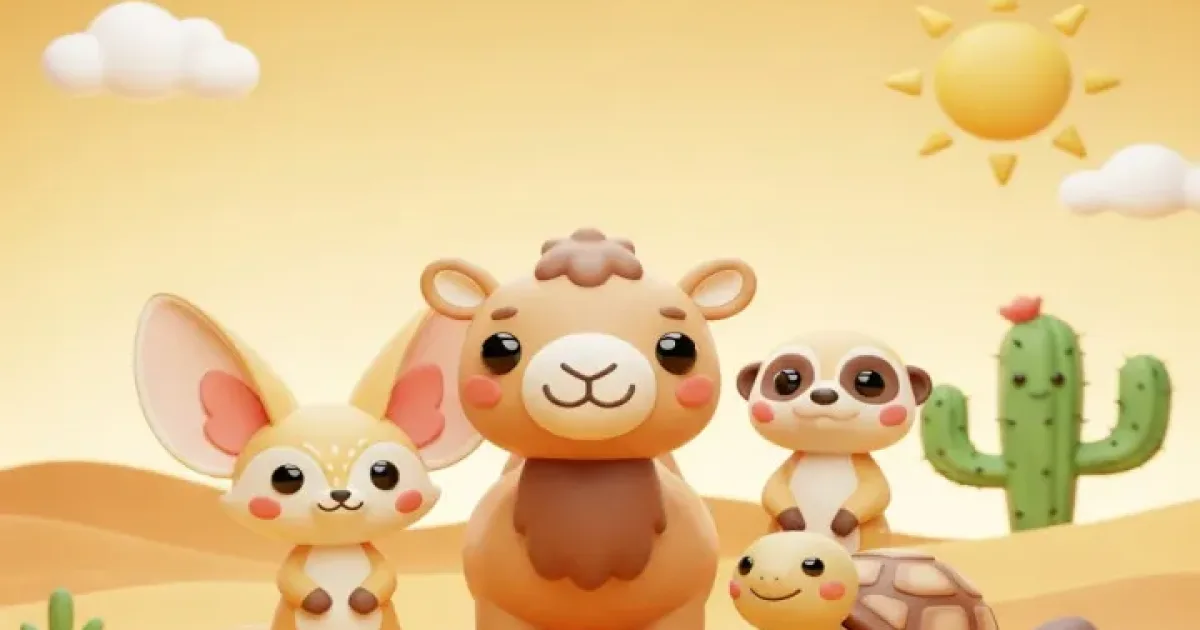
Why does a camel have a hump? Why are a fennec fox's ears so enormous? Desert animals are the easiest place for a child to meet an idea that runs through all of biology: bodies match the places they live in.
One question, endlessly reusable
"Why does it have that?" is a question a three-year-old can ask and understand the answer to. In the desert, the answers are unusually visible: big ears release heat, a hump stores fat, pale fur reflects the sun.
A child who gets used to asking it will keep asking it about every animal, plant and person they meet. That habit is worth more than any individual fact.
The desert is a place with rules
Very hot in the day, surprisingly cold at night, and almost no water. Once a child holds those three rules, every desert animal makes sense as an answer to them.
It is also a child's first encounter with the idea that different places are genuinely different — the beginning of geography, arriving through animals rather than maps.
Five animals with obvious answers
- Camel — the hump stores fat, so it can go a long time without food
- Fennec fox — huge ears let heat escape
- Meerkat — stands tall to watch for danger across open ground
- Scorpion — hides under stones all day, comes out at night
- Ostrich — cannot fly, but runs faster than most animals can chase
Do not make it frightening
Scorpions and snakes come with a reputation. A calm picture and a plain description — "it hides in the day and comes out at night" — is more useful than either drama or warnings.
A child who is curious about an animal will listen to safety advice later. A child who is frightened of it stops listening altogether.
How EduPlayKids helps
The Desert Animals category introduces twelve animals with realistic pictures and real recorded sounds — camel, scorpion, rattlesnake, fennec fox, meerkat, ostrich, gecko and more.
A child hears the animal, then taps the right one. It is a small, well-defined habitat, which makes it one of the easiest categories to talk about together.
Meet Twelve Desert Animals 🐪
Real pictures, real sounds, voice-guided.